- Home
- Leading Self
- Goal Setting for Success Course
- Chapter 9.1, Network It Out
Networking for Goal Achievement: Build Your Support Network for Success
Chapter 8: Network It Out!
In this chapter of our free Goal Setting for Success personal goal setting course, you’ll discover how networking for goal achievement can dramatically increase your odds of success. As a new or aspiring leader, frontline manager, solopreneur, small business owner, or anyone focused on self-improvement, you don’t have to chase your goals alone.

By building a strong support network around your most important goals, you gain mentors, peers, and accountability partners who help you stay focused, overcome obstacles, and keep moving forward. This is networking for success with a clear purpose: to achieve the personal and business goals that matter most to you.
Download Free: Goal Setting for Success eBook
Our goal setting course has shown you how to clarify what you want, set priorities, and create plans. In this chapter, you’ll learn how to “network it out” - using relationships, communities, and organizations to support your goals every step of the way.
Why Your Network Matters for Goal Achievement
When people think about goal setting, they usually focus on the plan: deadlines, to-do lists, and tools. Those matter, but they’re not enough. The people around you can either accelerate your progress or quietly hold you back.
Successful goal setting plans include building a solid network of support. A thoughtful networking strategy for goal achievement ensures you’re surrounded by people who:
"First say to yourself what you want to do and be, then do what you have to do in order to meet your goals and make your dreams a reality."
- Encourage you when you doubt yourself
- Share ideas, insights, and lessons from their own experience
- Open doors through referrals and introductions
- Hold you accountable when you’re tempted to quit
- Celebrate with you when you achieve your goals
Networking is about building strong relationships. It’s not just about shaking hands or collecting business cards; it’s about creating a goal achievement support network that believes in your potential and helps you grow into the leader you’re becoming.
As you continue this personal goal setting journey, ask yourself:
“Am I trying to reach my goals alone, or am I intentionally building a network that supports my success?”
Networking for Goal Achievement: A Simple 4-Step Plan
Networking for goal achievement doesn’t have to be complicated or overwhelming. You don’t need to meet hundreds of people. You need to connect with the right people, in the right way, for the right reasons.
Use this simple four-step plan to put networking for success into action.
Step 1: Clarify 1–3 Key Goals

Before you can build a support network, you must be clear about what you’re trying to achieve.
- Write down your top 1–3 personal or business goals for the next 6–12 months.
- Be specific: “Increase monthly revenue by 25%,” “Earn a promotion to supervisor,” “Run a 10K,” or “Pay off a specific debt.”
- Note why each goal matters to you. Your “why” will guide who you need in your corner.
When you know exactly what you want, you can network with purpose. You’ll quickly see who can help, who you can help, and which relationships will move you closer to your goals.
Step 2: Identify the People Who Can Help
Now, look at each of your goals and ask: “Who has already done this, or is doing it well?”
Make a list that might include:
- Mentors or experienced leaders in your industry
- Peers and colleagues who share similar goals
- Former managers, teachers, or clients who believe in you
- Community leaders or professionals you respect
- Friends or family members who consistently support your growth
Think in terms of roles, not just names:
- Who can challenge your thinking?
- Who can provide expert guidance?
- Who can connect you to opportunities?
- Who can encourage you when things get tough?
This is how you begin to design a true goal achievement support network around your life and work.
Step 3: Choose Your Networking Channels
Next, decide where you’ll connect with people who align with your goals. Choose networking channels that fit your personality, schedule, and ambitions, such as:
- Local business or professional groups
- Industry associations or trade organizations
- Community service clubs
- Skill-building and leadership organizations
- Online communities and forums
The key is to connect where people are already gathering around the kinds of goals you care about - leadership, business growth, communication, or personal development.
Step 4: Make a Simple Outreach Plan
Finally, turn your networking intentions into action. Create a simple outreach plan you can actually follow:
- Schedule 1–2 networking actions per week:
- Attend a breakfast or lunch meeting
- Send a thank-you or check-in email
- Request a short mentoring conversation
- Join or participate in an online group discussion
Prepare a clear, honest way to share your goals:
“I’m working toward [goal] over the next 12 months. I’d love to learn from your experience and see how I can support your goals as well.”
Consistency beats intensity. A few focused networking actions every week will do more for goal achievement than one giant burst of effort that quickly fades.
Mini Exercise: Design Your Goal Support Network
Take a few minutes to complete this short exercise:
- Write down one important goal you’re working on right now.
- List three people or groups who could help you move closer to that goal.
- For each one, write down one simple action you can take this week (email, phone call, coffee meeting, event, online message).
- Put those actions on your calendar and treat them like important appointments with your future success.
This small, intentional step turns networking for goal achievement from a good idea into real, forward movement.
Measure Your Networking for Goal Achievement
Networking for goal achievement becomes much more powerful when you can see your progress in clear numbers. Instead of guessing whether your support network is growing, you can track it and make better decisions about where to invest your time.
Use the simple networking KPIs (Key Performance Indicators) below to measure how effectively your support network is helping you achieve your personal and business goals.
Networking KPIs to Track
Consider tracking:
- New strategic connections per month: People you’ve met who can directly support your key goals (mentors, peers, referral partners, potential clients, etc.).
- Meaningful networking conversations per week: Phone calls, video chats, or in-depth messages where you talk about goals, challenges, and ways to help each other.
- Follow-up rate: The percentage of people you reconnect with within 3–7 days after an event, meeting, or introduction.
- Opportunities created per quarter: Referrals, introductions, collaborations, job leads, speaking invitations, or new clients that arose from your networking.
- Goal progress influenced by your network: For each major goal, note when your network helped you move forward (e.g., “Met a mentor who helped refine my plan,” “Received a referral that became a new client,” “Got feedback that improved my proposal.”).
Create a Simple Networking Tracking Sheet
You don’t need complex software to track networking for goal achievement. A simple one-page tracking sheet works well. Create a table with columns such as:
- Date
- Name / Organization
- Type of contact (event, email, call, online group, etc.)
- Goal this relates to (revenue, promotion, skill-building, health, etc.)
- Action taken (met, followed up, introduced, helped, etc.)
- Next step and date
- - Outcome / notes
At the end of each week:
- Count how many new contacts you made.
- Review how many follow-ups you completed.
- Highlight any opportunities your network helped create.
Over time, you’ll see which networking channels and relationships contribute most to your goal achievement. You can then focus more energy on the people, groups, and activities that truly support your success.
Networking Resources to Help You Achieve Your Goals Faster
Once you know your goals and begin to identify helpful people, the next step in networking for success is to plug into the right communities.
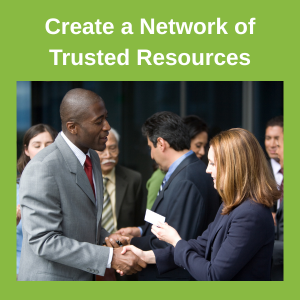
The organizations below provide powerful opportunities for leaders, solopreneurs, and small business owners to build a support network for your goals.
As you put networking for goal achievement into practice, these organizations give you real-world places to meet mentors, peers, and partners who can support your goals. However, be sure to give as good as you get. Successful networking take a strong commitment on the part of both parties.
When you join any community organization, they are looking for people who will dedicate time to the group and add value to others, not just receive the benefits the organization can provide to you. Go in with a "Help and be helped" spirit.
SCORE – Mentors for Your Business and Career Goals
SCORE is a national organization that provides free mentoring to small business owners and aspiring entrepreneurs. Experienced business professionals donate their time to help others succeed.
How SCORE supports networking for goal achievement:
- Offers one-on-one mentoring to discuss your business and personal goals
- Provides workshops and resources on planning, marketing, and finance
- Connects you with mentors who have already walked the path you’re on
Use SCORE to stress-test your goals, refine your action plans, and shorten your learning curve by learning from people who have already achieved what you want to achieve.
Chamber of Commerce – Connect with Local Business Leaders
Your local Chamber of Commerce is a powerful resource for networking for success in your community.
How your Chamber can help you achieve your goals:
- Introduces you to local business owners, professionals, and influencers
- Hosts events where you can share your goals and learn from others
- Creates visibility for your business and leadership brand
By building relationships through your Chamber, you gain access to ideas, referrals, and partnerships that can move your personal and business goals forward faster than working in isolation.
Rotary International – Serve, Lead, and Build Community
Rotary International is a service organization that brings together leaders and professionals to take action in their communities and around the world.
How Rotary supports a goal-focused network:
- Develops your leadership skills through service projects
- Connects you with purpose-driven, community-minded people
- Gives you opportunities to practice teamwork, communication, and problem-solving
If some of your goals involve leadership, community impact, or personal growth, Rotary can become a powerful part of your goal achievement support network.
Toastmasters International – Build Communication Confidence
Toastmasters International helps people become more confident communicators and leaders through regular meetings and feedback.
Why Toastmasters matters for goal achievement:
- Strengthens your public speaking and presentation skills
- Builds your confidence when sharing your goals and ideas
- Provides a supportive environment to practice leading and influencing
As you improve your communication skills, you increase your ability to inspire support for your goals, lead your team, and confidently present your vision to others.
Quick Self-Check: Is Your Network Supporting Your Goals?
Ask yourself:
- Do I regularly talk with people who challenge and encourage me about my goals?
- Do I have at least one mentor or peer who has already achieved what I’m aiming for?
- Do I belong to at least one group or organization aligned with my personal or business goals?
- Do I ask for help, feedback, and introductions — or do I try to do everything alone?
If you answered “no” to any of these, choose one small networking action you can take this week to strengthen your support network. Remember, networking for goal achievement is built one relationship, one conversation, and one decision at a time.
Real-World Networking for Goal Achievement: Examples and Simple Scripts
Now let’s bring networking for goal achievement to life with real-world examples. The scenarios below show how solopreneurs, frontline leaders, and small business owners can use a goal-focused support network to move from intention to results.
Use these stories and scripts as starting points. Adapt the language to fit your personality, your industry, and the specific goals you’re working toward.
Scenario 1: Solopreneur Seeking 3 New Clients
You’re a solopreneur who wants to secure three new clients in the next 90 days. Instead of cold-pitching strangers, you decide to use networking for success by reconnecting with people who already know you and by joining one local business group.
How your support network helps:
- A former colleague introduces you to a business owner who needs your services.
- A local networking group gives you a chance to briefly share your goals and expertise.
- A satisfied client agrees to introduce you to two peers who might also benefit from your work.
Sample outreach message to a former contact:
“Hi [Name],
It’s been a while since we last connected, and I hope you’re doing well.
Over the next few months, I’m focused on working with [describe your ideal client briefly] to help them [state the main benefit you deliver]. I’m looking to bring on three new clients who are serious about achieving [specific outcome].
If you know anyone who might benefit from a quick conversation, I’d be grateful for an introduction. I’d also love to hear what you’re working on and see how I can support your goals as well.
Thanks in advance for any ideas, and I hope we can catch up soon.
Best,
[Your Name]”
Sample follow-up message after a networking event:
“Hi [Name],
Great meeting you at [event name] on [day]. I appreciated our conversation about [topic you discussed], and I enjoyed hearing about your goals around [their goal].
As I mentioned, I’m currently focused on helping [type of client] achieve [specific outcome], and I’m using networking for goal achievement to connect with people who are working toward similar results.
If you’d ever like to compare notes or explore ways we might support each other’s goals, I’d be happy to schedule a brief call.
All the best,
[Your Name]”
Scenario 2: Frontline Leader Working Toward a Promotion
You’re a frontline manager who wants to earn a promotion to a higher leadership role within 12 months. Rather than hoping someone notices your hard work, you use a networking strategy for goal achievement inside your organization.

How your support network helps:
- A senior leader becomes an informal mentor and gives you feedback on your development plan.
- A peer in another department invites you to join a cross-functional project that increases your visibility.
- A former manager shares insight about how promotion decisions are really made.
Sample outreach message to a potential mentor:
“Hi [Name],
I admire the way you’ve grown your career here at [company], and I’ve learned a lot from watching how you lead your team.
Over the next year, I’m working toward a clear goal: to become a [target role] and take on greater responsibility. I’m building a support network to help me grow into that role, and I would value your perspective.
If you’d be open to it, I’d appreciate 20–30 minutes sometime in the next few weeks to ask a few questions about how you approached your own development and what you believe is most important for someone in my position.
Thank you for considering this, and please let me know if there’s anything I can do to support your priorities as well.
Best regards,
[Your Name]”
Sample follow-up message after a mentoring conversation:
“Hi [Name],
Thank you again for taking the time to speak with me about my leadership goals. Your insights on [two or three points they shared] were especially helpful.
As we discussed, I’m going to [briefly state 1–2 concrete actions you’ll take], and I’ll keep you posted on my progress. Your support is an important part of my networking for goal achievement, and I truly appreciate your guidance.
Thanks again for your time and leadership.
Sincerely,
[Your Name]”
Scenario 3: Small Business Owner Building Referral Partners
You own a small business and want to increase revenue by 25% this year. Rather than relying only on advertising, you decide to focus on networking for success by building referral partnerships with complementary businesses.
How your support network helps:
- A local accountant refers clients who need your services.
- A marketing consultant invites you to contribute to a webinar or workshop.
- A chamber of commerce contact introduces you to other owners who serve the same audience.
Sample outreach message to a potential referral partner:
“Hi [Name],
I’ve followed your work at [business/organization] and appreciate how you help [describe their clients] with [what they do]. I work with a similar audience, but in a different way.
My goal over the next 12 months is to grow my business by about 25% by focusing on serving [describe your ideal client] and helping them achieve [result]. I’m using networking for goal achievement to build a small group of referral partners so we can support each other’s clients more effectively.
I’d love to schedule a brief meeting to learn more about your services, share what I do, and see if there might be a natural way to refer business in both directions.
Would [offer two time options] work for you?
Best,
[Your Name]”
Sample follow-up after a good first meeting:
“Hi [Name],
Thank you for meeting with me to explore how we might support each other’s clients. I enjoyed learning more about how you help [their clients] with [their expertise].
As discussed, I’ll be on the lookout for clients who need [their service], and I’ll introduce them to you when appropriate. In return, if you come across clients who are working toward [your clients’ main goal] and could benefit from [your service], I’d be grateful for an introduction.
I’m committed to networking for goal achievement in a way that creates value for everyone involved, and I believe we can build a strong, long-term partnership.
Thanks again, and I look forward to staying in touch.
Warm regards,
[Your Name]”
"A pessimist sees the difficulty in every opportunity; an optimist sees the opportunity in every difficulty."
- Winston Churchill
Success Lesson #16: Show Victory in Your Face When You Network
As you network for goal achievement, you’re not just sharing your goals - you’re also communicating your confidence and commitment. People are far more likely to support someone who looks and acts like a leader on a mission.
This is the heart of Success Lesson #16: Do you carry victory in your face when you network?
How a Winner’s Mindset Attracts a Stronger Support Network
Think about the people you naturally want to help:
- They speak with energy and conviction.
- They look like they believe in their future.
- They show up prepared and focused.
- They treat others with respect and appreciation.
Now ask yourself:
“When I talk about my goals, do I project that same sense of belief and commitment?”
"Why should we call ourselves leaders, unless it be to succeed in everything, everywhere? Never feel that anything is beyond your powers."
When you show up with the conviction that you will reach your goals:
- Mentors are more inclined to invest time in you.
- Peers are more likely to invite you into their circles.
- Leaders are more willing to open doors and make introductions.
- People see you as someone worth backing.
That doesn’t mean pretending you have everything figured out. It means holding your head up, looking people in the eye, and speaking from a place of belief that you are serious about your goals and willing to do the work.
Simple Ways to “Carry Victory in Your Face”
Here are a few practical ways to bring a winner’s mindset to your networking:
Prepare a clear, confident description of your goals.
“Over the next year, I’m focused on [goal]. I’m committed to making it happen, and I’m learning from people who’ve already done it.”
Practice positive, open body language.
Stand tall, offer a genuine smile, and maintain good eye contact.
Listen more than you speak.
Show sincere interest in others’ goals. Networking for success is a two-way street.
Follow through on commitments.
If you promise to send information, connect someone, or attend a meeting, do it. Reliability builds trust.
When you treat each conversation as a chance to practice networking for goal achievement, you steadily build the relationships that move your goals from ideas to reality.
As you practice these habits, you’ll find that the right people respond. They see your seriousness, your character, and your potential - and they’re more willing to become part of your goal achievement support network.
Download Our Entire Series of Goal Setting Articles: Goal Setting for Success eBook
Download our free Goal Setting for Success eBook: Download PDF
Inside, you’ll get: The full step‑by‑step course content for all chapters and sections; Motivational Lessons for Success at the end of each chapter; Worksheets and examples you can print or use digitally; and Guidance tailored to both personal life and leadership at work
To access all of our tools simply subscribe to our free newsletter. You will immediately receive a password that grants access to our entire leadership tools library.
Your privacy is important to us. We never share or sell email addresses.
Next Goal Setting for Success Chapters




Contact Information:
phone
(503) 970-9777
Email Customer Service
helpsupport@leadership-tools.com
Email Richard
richard@leadership-tools.com

By Richard Gorham
Leadership-Tools.com
2879 Riverwalk Loop, Eugene, Oregon, 97401
Copyright © 2003 - 2026 All Rights Reserved