360 degree feedback is a survey that collects anonymous ratings of a leader from the people around them, usually their manager, peers and direct reports. It shows how others experience your leadership, which you can compare with how you see yourself.
- Home
- Leadership Articles
- 10 Steps to Leadership Development
- Step 4: Get 360 Feedback
360 Degree Feedback for Leadership Development
360 degree feedback shows you how your manager, peers and team see your leadership, including strengths you may not know you have and areas where you can improve. It's Step 4 of the 10 Steps to Leadership Development, and the free assessment below helps you gather that feedback in one place.
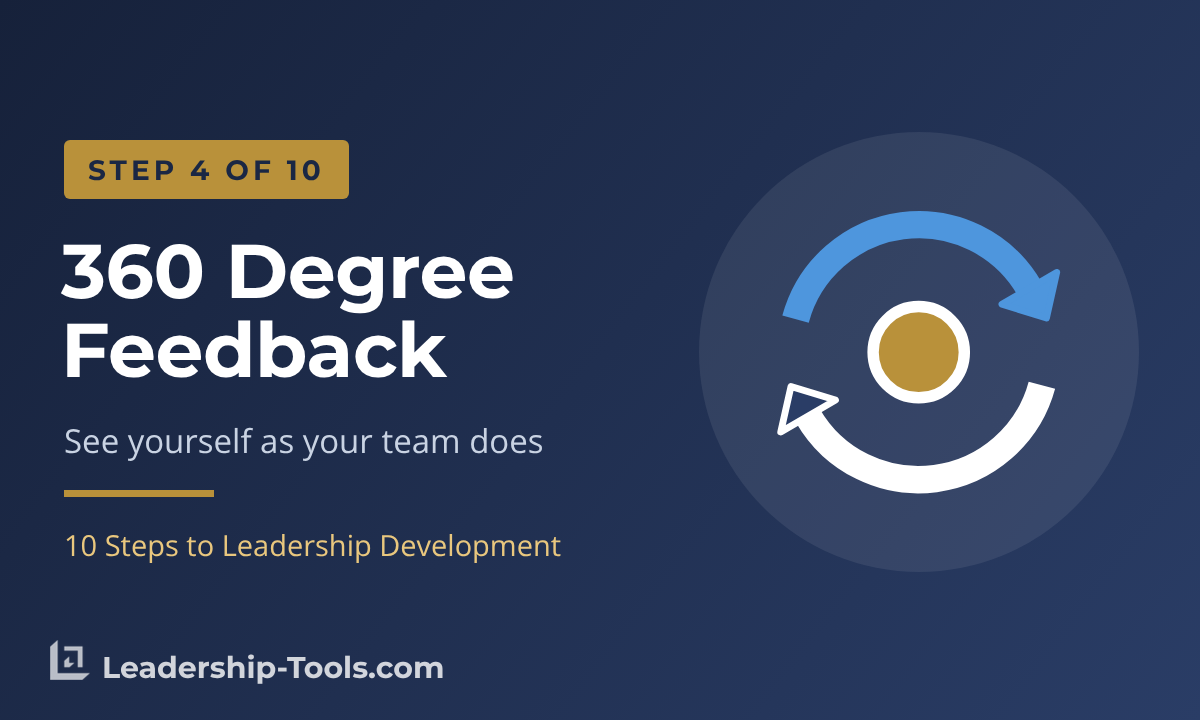
The name comes from the full circle of people giving the feedback. Your manager sees one side of your leadership, your peers see another and your direct reports see the side that shapes their workday. Anyone else who works with you closely, like a business partner or a long-term client, can take part too.
One person's opinion can be easy to set aside, but when five or more people point to the same thing, it's worth your attention. A 360 leadership assessment also shows where your view of yourself and your team's view of you don't line up, and those gaps are often the most useful part of the results.
You may hear things that surprise you, or that you don't agree with, and that's okay. Every honest critique, whether it's a compliment or not, is a gift from someone who agreed to invest time in your growth, so thank the people who were willing to give it.
360 feedback is one part of a broader leadership development framework, and it works best after you've looked at your own leadership first. If you've completed the self-assessment in Step 3, you'll be able to compare your scores with your team's, category by category.
Jump To: How to Run a 360 | Example | Questions | Feedback Tools | FAQ
How to Run a 360 Leadership Assessment
The free 360 degree feedback tool comes with a full administrator's guide, and these are the steps that matter most when you're the leader asking for feedback.
- Decide you want to hear it. A 360 works when the leader is open to what comes back. If you're anxious about it, talk it through with your manager or a mentor before you start.
- Ask someone else to run it. An HR partner, a coach, a mentor outside your reporting chain or a peer leader from another team can send the surveys and collect them. If the surveys come back to your desk, people tend to soften their answers.
- Choose five to ten raters. Include your manager, two to four peers and two to four direct reports, and pick people who see your work regularly.
- Give raters two weeks. The survey takes 10 to 15 minutes, and one reminder at the halfway point is plenty.
- Read the results with your administrator. Start with your lowest categories, then read the comments. When three or more people say something similar, treat it as a theme worth acting on.
- Pick one focus area and one behavior. Thank your raters and tell them what you're working on, because people give better feedback next time when they've seen the last round make a difference.
- Take it again in a year. Use the same raters where you can, so the change in your scores reflects the change in your leadership.
Keep your 360 results for your own development. It's not meant to be part of your annual review. When people know their answers could show up in a performance review or a pay decision, they tend to rate more carefully, and the next 360 you run is likely to be less honest.
A 360 Leadership Assessment in Practice
DANA'S 360 RESULTS
Dana manages a claims processing team of nine. She asked Keith, an HR partner from another department, to run her 360, and he sent the survey to eight people: her manager, three peers and four of her direct reports. Seven returned it within two weeks.
Her results put Accountability at the top, with an average of 10.8 out of 12. Communication came in lowest at 7.5, and because Dana had rated herself 10.5 on Communication in her self-assessment, the 3-point gap marked it as a blind spot. Three of the comments said the team heard about changes after they'd already happened.
Dana picked Communication as her focus and started a 10-minute huddle every Monday at 8:30 to walk through the week's changes. Keith sent the thank-you notes, and Dana told her team at the first huddle why she'd started it.
A year later, with the same raters, her Communication average was 9.6.
Dana's plan was small enough to keep every week, and her team could see the change long before the next 360.
360 Feedback Questions for Leaders
The free tool asks raters to respond to 32 statements, four in each of eight leadership categories. Each one describes something a rater can see you do, which makes the answers easier to act on than a general rating like “good communicator.”
Raters answer each question from Highly Agree to Highly Disagree or mark No basis to rate for anything they haven't seen. Here is one statement from each category to give you a feel for the survey.
- Stability: "Stays composed when things go wrong or pressure builds."
- Setting Boundaries: "Protects the team's time from low-value meetings and busywork."
- Productivity: "Prioritizes high-impact work over what's just urgent."
- Work Quality: "Produces work that holds up and rarely needs to be redone."
- Accountability: "Owns their decisions and results without shifting blame."
- Team Building: "Invests time in developing each team member, not just the strongest performers."
- Communication: "Shares information openly and on time, not after the fact."
- Leadership: "Recognizes good work publicly and specifically."
You'll find more sample statements and how the scoring works on the 360 degree feedback tool page.
"If you are a leader, do everything you can to grow yourself and create the right environment for others to grow."
- John C. Maxwell
Recommended Leadership Feedback Tools.
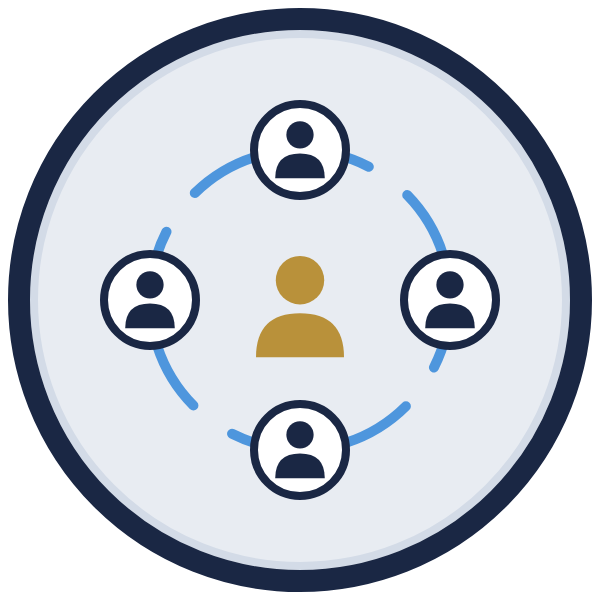
Our free 360 degree feedback tool is one of the most popular on the site, because it shows you how the people around you experience your leadership.
Raters respond to 32 statements in eight leadership categories, and the Excel version does the scoring for you. You'll see a composite score from 0 to 300, your strongest and weakest categories and comments grouped by theme, never by who wrote them.
Download the 360 degree feedback tool in PDF, Word, Excel or Google format, and ask someone you trust to run it for you.
When someone leaves your team, it's worth finding out why, but many people won't tell their manager the real reason. For some, the reason is the manager, and others just want to leave on good terms.
Our free Employee Exit Survey has 21 questions, and someone other than you, usually HR, collects it and keeps it confidential. Read the answers alongside your 360 results and look for the themes that show up in both.
Every person on your team needs to know what's expected of them, have the tools and support to do the work and feel that their work matters. As the leader, you have a lot of influence over all of it.
The 10 Key Questions leadership quiz helps you find out where your team stands and start a conversation about what you can do more of, less of or differently.
360 Degree Feedback FAQ
The questions below address what leaders most commonly ask about 360 degree feedback.
Click on the (+) sign below to expand each question. Click the (-) sign to collapse it again.
What is 360 degree feedback in leadership?
Who should give 360 feedback?
Five to ten people who see you work regularly is a good range. A balanced mix is your manager, two to four peers and two to four direct reports, and in a small business, contractors or long-term clients can stand in for direct reports.
Is 360 feedback anonymous?
It should be. Someone other than the leader, like an HR partner, a coach or a mentor outside the reporting chain, collects the surveys, and the leader only sees averages and comment themes, never who said what.
How often should leaders do a 360 assessment?
Once a year works well for most leaders. That gives you time to work on one focus area and gives your raters time to see the change before they rate you again.
What should you do with your 360 results?
Pick one focus area, usually your lowest category or the biggest gap between your self-scores and your team's, and name one behavior to practice. Thank your raters, tell them what you're working on and keep the results out of performance reviews and pay decisions.
Continue the 10 Steps Series




Richard Gorham has led teams in financial services for more than 30 years, from retail branches and operations to investments and insurance, and he still leads a team today.
He founded Leadership-Tools.com in 2002 to give managers free, practical tools like the ones he used in his various leadership roles. Every tool here has been used in a real workplace and comes with a filled-in example you can follow.

Contact Information:
phone
(503) 970-9777
Email Customer Service
helpsupport@leadership-tools.com
Email Richard
richard@leadership-tools.com

By Richard Gorham
Leadership-Tools.com
2879 Riverwalk Loop, Eugene, Oregon, 97401
Copyright (c) 2002 - 2026 All Rights Reserved