Yes. Even if you didn't hand over physical cash, a card purchase lowers the money available in your account, so it belongs in Cash Out.
- Home
- Leading Self
- Debt Payoff Planner Templates
- Daily Cash Flow Template
Daily Cash Flow Template for Money Management
Our free Daily Cash Flow Template helps you manage your money by tracking the timing of every dollar that comes in and goes out, one day at a time. It's one of several free tools that come with our 10 Steps to Conquer Debt eBook.
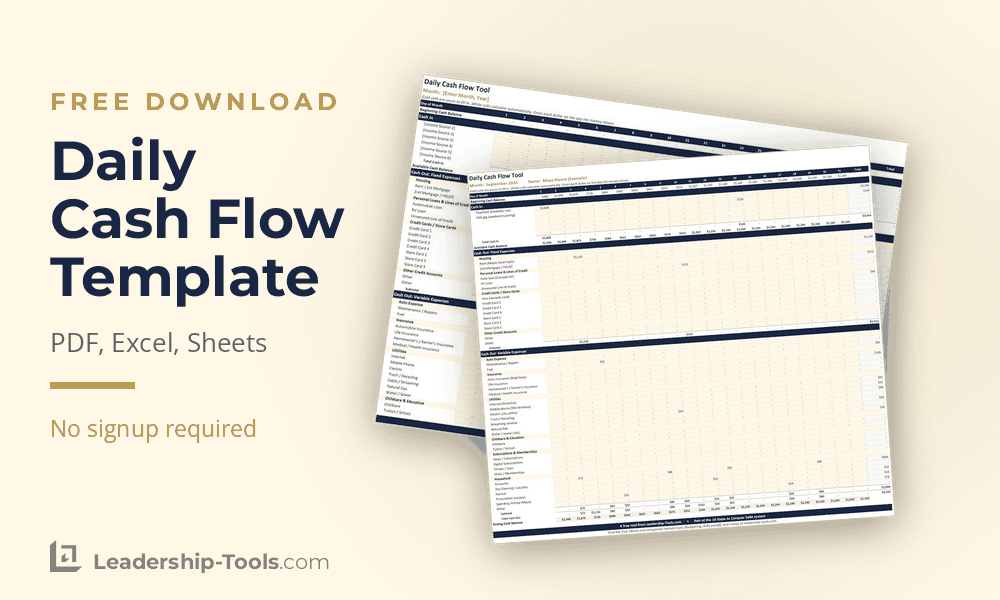
Download Daily Cash Flow Template:
Instead of wondering, "Will I have enough to cover that bill?" you'll see, on paper, exactly how your cash moves in and out of your account each day, so you can lead your financial life with confidence.
In business, cash flow statements track the money coming in from sales and the money going out for expenses. The same idea works just as well in your personal life.
You may already keep a monthly budget, and you can still get caught off guard when a bill comes due a few days before your paycheck arrives. Medical bills, car repairs, weather damage, a broken window, a last-minute school expense: real-life surprises like these can throw off your plan.
Jump To: Download Template |What It Is (& Who It's For) | What's Inside the Template | How to Use | Example | Why It Matters | Daily Routine | Cash Flow vs Checkbook | Building Confidence | FAQ | Get Updates Free | Download Template
"If I had to run a company on three measures, those measures would be customer satisfaction, employee satisfaction and cash flow."
- Jack Welch
To manage these costs effectively, you have to consider the timing of:
- When your income arrives, and
- When each bill comes due.
When you compare day-by-day cash coming in against cash going out, you can:
- Avoid late fees and overdrafts.
- Cover your household's basic needs with confidence.
- Make smarter, proactive decisions about paying down debt and saving.
It isn't enough to fill out a personal financial statement once and file it away. Your net worth statement is only accurate on the day you complete it. Your Daily Cash Flow Tool keeps you in touch with your money every single day.
Download Our Free Daily Cash Flow Template
You're here for a daily cash flow template you can put to work today. Start by downloading the format that fits your style: the Excel or Google Sheets version if you want the math done for you, or the printable PDF if you'd rather write it in by hand at the end of each day.
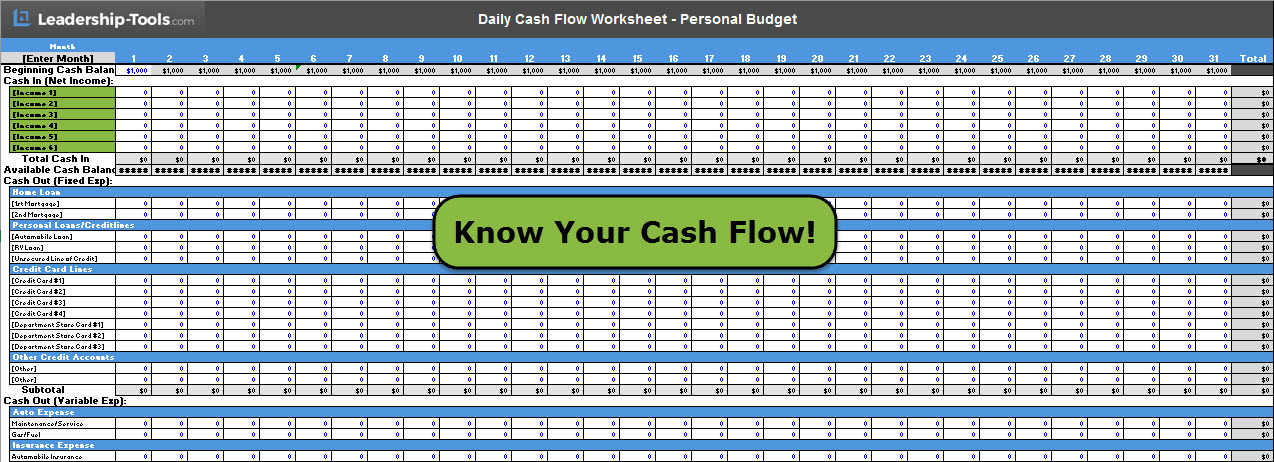
What a Daily Cash Flow Template Is (and Who It’s For)
A daily cash flow template is a simple cash-in, cash-out tracker that shows your real money position, day by day, across a whole month.
Instead of guessing whether you can afford something, you'll see how much cash you have available, what changed today, and what's left at the end of the day. That lets you make decisions based on what's real, not on hope.
Who This Daily Cash Flow Tracker Helps Most
- Anyone living paycheck-to-paycheck, or close to it
- People paid weekly, biweekly, irregularly, or on tips and commission
- Households juggling due dates: rent or mortgage, utilities, subscriptions, and debt payments
- Solopreneurs who want a personal cash flow view, separate from their business books
- Anyone rebuilding their finances and trying to stop "surprise" shortfalls
Daily Cash Flow vs. Budgeting (Why You Often Want Both)
- A budget is the plan: what you intend to spend over the month.
- Daily cash flow shows what's really happening with your cash, and how much you have on any given day.
Using both gives you control: the plan, plus the daily reality check. This is a different tool from our Household/Expense Budget, which is where you set those monthly limits. They work well side by side.
If your biggest money challenge is timing, with bills landing before the money arrives, this daily cash flow template is one of the fastest ways to get back in control.
This isn't about tracking every penny forever. It's about a light daily habit that builds confidence. After a week or two, you'll start to see patterns: which days run tight, which categories quietly drain your account, and how your paydays and due dates line up. From there you can make small, high-impact moves, like shifting a due date, keeping a minimum balance buffer, or trimming one recurring expense, that open up real breathing room.
This daily cash flow template helps you move from "I hope I'll be okay" to "I know what to do next."
What's Inside the Daily Cash Flow Template
The tool is built to be simple enough to use every day and clear enough to keep you from second-guessing the numbers. The goal here is just to give you a reliable snapshot of your cash position so you can make good decisions in real time.
How the Tool Is Laid Out
The days of the month run across the top, numbered 1 through 31. Your income and expense lines run down the left side. You enter each amount in the column for the day it happens, and the tool keeps a running balance for you.
The Running Balance: Beginning, Available, and Ending Cash
Three rows do the heavy lifting:
- Beginning Cash Balance is what you start the day with. You enter it once, on Day 1. After that, each day fills in from the day before.
- Available Cash Balance is your beginning balance plus any money that came in that day.
- Ending Cash Balance is what's left after the day's spending. It becomes tomorrow's beginning balance, so your true cash position carries forward all month.
Cash In
Your income lines: paychecks, a side gig, transfers, reimbursements, tips. Enter each one on the day it lands.
Cash Out, Split into Fixed and Variable
- Fixed Expenses are the bills that stay about the same each month: rent or mortgage, loans, and credit or store cards.
- Variable Expenses are everything that moves around: fuel, insurance, utilities, childcare and school, subscriptions and memberships, groceries, and the rest.
Each section totals itself, and the two combine into Total Cash Out for the day.
The Total Column
On the far right, a Total column adds up each line across the whole month, so you can see where your money went by category once the month is done.
A Built-In Shortfall Warning
If a day's balance ever drops below zero, the tool turns that number red. That's your early signal to act, before an overdraft happens instead of after.
The One Formula That Drives It All
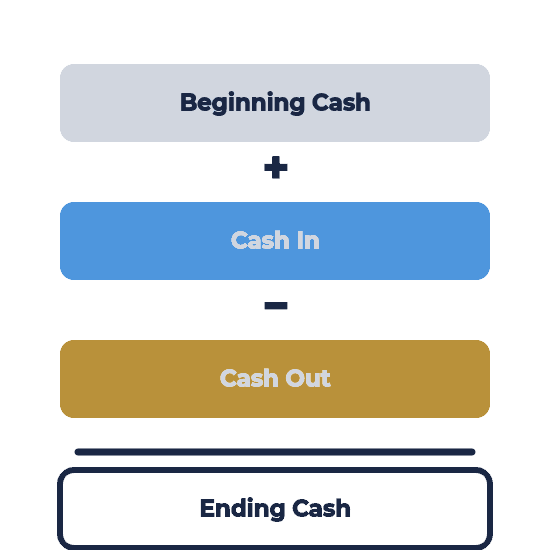
Each day's ending balance becomes the next day's beginning balance. That chaining is what turns a list of transactions into a running picture of your money, and it's the reason the tool can tell you on the 8th that the 22nd is going to be tight.
If you have several transactions in one day, nothing changes. You enter each amount on the day it happens, and the tool adds them up before applying the formula. Three grocery runs and a fuel stop all land in Cash Out for that day.
The reason this matters more than a monthly total is timing. A month can end in the black while three days inside it went negative, and those are the days that generate overdraft fees. Monthly math hides them. Daily math surfaces them while you can still do something about it.
Once you have seen the formula work for a week, you stop thinking about it. What you notice instead is the ending balance at the bottom of each day, and whether it is heading where you want it to.
Renaming Lines to Fit Your Life
The income and expense lines come pre-labeled, and you can rename any of them to match your own accounts. Name a credit card after your bank, a loan after your lender, a utility after your provider. The clearer the labels, the easier the patterns are to spot.
Category Guidance (Keep It Practical)
If you're not sure what to enter where, start here:
- Enter daily: groceries, fuel and transportation, and the small everyday purchases that add up fast.
- Enter on the due date: rent or mortgage, utilities, subscriptions, and debt payments.
- Enter right away: any purchase or bill big enough to put you at risk of an overdraft.
When the math and the categories are obvious at a glance, you cut stress and head off the "where did it go?" moments. You can see what you started with, what changed today, and what you truly have left.
Clear lines also take the emotion out of money decisions. After a few days, the patterns show up fast: a forgotten subscription, the "quick stops" that pile up, the days your spending spikes. From there, your next move gets simpler: pause a purchase, shift a due date, or set aside a small buffer. That's how daily tracking turns into real control.
How to Use the Daily Cash Flow Template (Step-by-Step)
This is the simplest routine that still gives you real control. If you update the tool once a day, you'll spot problems while they're still small.
Once you've downloaded the tool, here's how to put it to work:
1. Gather Your Information
Pull together the income sources, regular bills, debt payments, and due dates you already listed on your personal financial statement (statements, paystubs, etc.). If you haven't built one yet, this is a good time to list out your income and expenses.
2. Set Your Starting Balance
Enter your Day 1 Beginning Cash Balance: your checking balance, your cash on hand, or a combined number. However you define it, be consistent. From there, the tool carries each day's ending balance into the next day for you.
3. List Your Income by Day
Add every paycheck and other deposit you expect this month, each on the day it arrives. This shows you exactly when cash comes into your account.
4. List Your Bills and Spending by Day
Enter each bill and regular expense in the column for the day it's due, both fixed bills (rent, utilities, loan payments) and flexible spending (groceries, fuel, etc.).
5. Watch Your Running Balance
As you map the month, the tool shows which days run tight and where you have room to breathe. If the balance runs low before all your bills are paid, you'll know you need to adjust. Any day that goes negative turns red.
6. Take Proactive Action with Creditors
When the numbers show money will be short on a certain day, find the creditors most likely to work with you. Get on the phone, explain your situation honestly, and ask whether you can move the due date or make a smaller payment that cycle. Many creditors respect responsible, proactive communication.
The tool works best as a small daily habit: simple inputs, clear outputs, and a quick look at tomorrow's risks. It's the daily companion to the monthly money leadership session you set up earlier in the 10 Steps, the standing appointment where you sit down with your money on purpose. Use this personal budget worksheet and our other free tools to get started today.
Example: A Full Month, Filled In (So You Can Copy It)
A blank month can feel intimidating, so here's a realistic example you can mirror in your own copy. Meet Maya, a single renter who gets paid every two weeks.
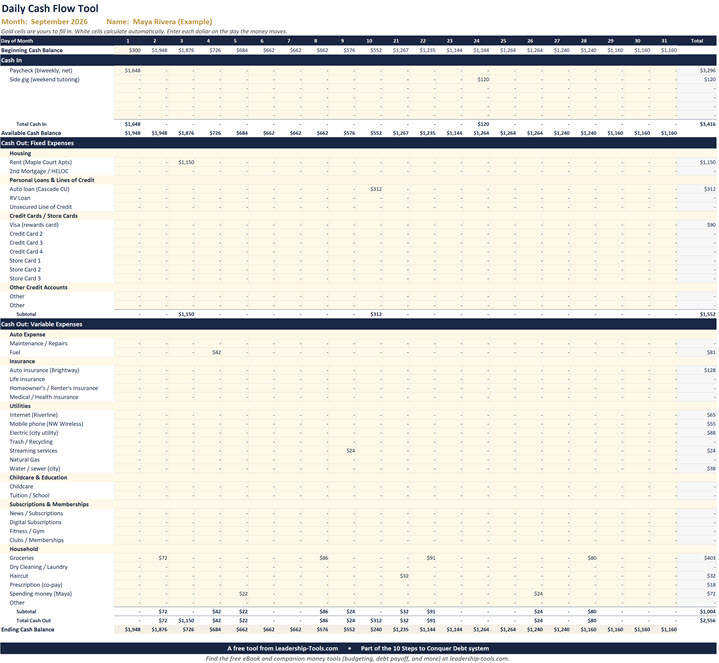
Here's how Maya's month plays out:
- She starts Day 1 with $300 and her first paycheck of $1,648, so her available cash is $1,948.
- Rent ($1,150) lands on Day 3, and over the next week and a half her groceries, fuel, car payment, and a few small purchases chip away at the balance.
- By Day 14, the day before her next paycheck, she's down to $148. It's tight, but it's positive, and because she saw it coming, she held off on anything extra during those lean days.
- Her Day 15 paycheck resets the month. Her mid-month bills (auto insurance, internet, phone, electric, water) land just after payday, where there's room for them.
- She ends the month around $1,160, with a clear record of where every dollar went.
The point isn't the exact numbers. It's that Maya could see the tight stretch days ahead of time, so it never turned into an overdraft or a panicked phone call.
A single day, up close: say you start a day with $500, take in nothing, and spend $40 on fuel and $60 on groceries. Your ending cash is $500 + $0 − $100 = $400, which becomes the next morning's beginning balance.
How to Use This Example
- If most of your spending is small daily purchases, enter them on their own lines so you can see the patterns.
- If you already know your big categories, you can combine the little stuff into one line, like "Daily spending."
Seeing a month filled in makes the tool feel like a tool, not a chore, because you know exactly what "done" looks like.
Why Daily Cash Flow Management Matters
With this tool, you can manage your cash flow with confidence, keep your bills on time, and make sure the money is there for your household's basic needs.
Once you've downloaded the tool, use the information you already gathered, especially if you've completed our personal financial statement, and start plotting your income and expenses for the coming month.
When you write down all your expected income and expenses for the month, you spend it on paper first, before a single dollar leaves your account. That's what planning for success looks like.
If you completed your personal financial statement, your due dates are already known. Enter each payment in the column for the day it's due, based on the cash you'll have available.
If you find yourself running short before all the bills are paid, find the creditors who will work with you, get on the phone, and ask for a later due date. Don't be embarrassed to ask. Be honest and explain your situation. You may be surprised how many creditors are glad to work with you.
This is all part of being a responsible adult who leads their cash flow instead of reacting to it. Use our daily cash flow template and other free tools to get started today.
Daily Close: The 10-Minute Cash Flow Routine
The fastest way to get results is to "close" your money day the way a shop closes its register: capture what happened, confirm the ending number, and get ready for tomorrow. This keeps your daily cash flow spreadsheet accurate and your stress low.
The Daily Cash Flow Close Checklist (10 Minutes)
- Collect your receipts or open your transaction list (bank app, notes, wallet).
- Enter all Cash In for the day, even small reimbursements.
- Enter all Cash Out: card, cash, and auto-drafts.
- Note anything still pending that's likely to post.
- Confirm the day's Ending Cash Balance.
- Compare it to your real bank balance as a quick reality check.
- Write one note: what changed today?
- Look at tomorrow: any bills due or income expected?
- If needed, pick one small action: delay a purchase, move money, cancel a subscription, or plan groceries.
Make It Easier to Stick With
- Same time every day (right after dinner or before bed)
- Same place (your desk, the kitchen table)
- Same reward (peace of mind and fewer surprises)
A daily close turns the template into a system. Take pride in knowing you've done the work to stay on top of your cash flow, because that's what puts you in charge of your finances.
Daily Cash Flow vs. Your Checkbook Register
As you start using the tool, it helps to see how it works alongside your checking account register:
- Your checkbook register shows how much money is available to spend right now.
- Your daily cash flow tool shows the bigger picture: what's coming in, what's going out, and what's already spoken for in the days and weeks ahead.
Our daily cash flow template is the tool that helps you keep the money you need, for when you need it.
Use the two together:
- Check your register to confirm your current bank balance.
- Check your cash flow tool to decide what you can safely spend today while still covering what's coming.
When it comes to money, success is in the details. By tracking your daily cash flow, you take ownership of those details and lead your financial life instead of reacting to it.
"No one's ever achieved financial fitness with a January resolution that's abandoned by February."
- Suze Orman
Build Confidence Through Daily Habits
As you direct your money with purpose, not once a month but every day, you'll feel more confident leading your financial life.
"Just as a fisherman must watch the ebb and flow of the tides, an investor and businessperson must be keenly aware of the subtle shifts in cash flow."
- Robert Kiyosaki
A few things you'll notice as the habit takes hold:
- You spend more intentionally, because you're seeing the whole month, not just today.
- You catch shortfalls before they become emergencies.
- You get more motivated to pay down debt, because you can see, in writing, what each payment does.
And when you find extra money, resist the urge to spend it without thinking. Send it toward savings, or toward paying down debt faster.
Frequently Asked Questions About Daily Cash Flow
Click on the (+) sign below to expand each question. Click the (-) sign to collapse it again.
Do I track card spending as "cash out"?
What about credit card payments?
Enter the payment on the day it leaves your checking account, under Cash Out. If you also tracked the original purchases day by day, that's fine; the point here is your cash availability. To keep things clean, some people track daily spending and treat the monthly card payment as its own line.
Should I include bills that haven't been paid yet?
For daily tracking, record what's happened so far. To plan ahead, enter upcoming bills in their future day columns; that's the whole point of mapping the month out on your daily cash flow template. Just don't double-count them once they're paid.
What if I'm paid weekly or irregularly?
This is exactly what a daily cash flow template is built for. Enter each bit of income on the day it arrives, and let the running balance show you whether your due dates will outrun your cash.
Do I have to fill in every line and all 31 days?
No. Use the lines that fit your life and leave the rest blank. If your month has 28 or 30 days, ignore the extra day columns. Empty cells simply read as zero.
What's the difference between Available Cash and Ending Cash?
Available Cash is your starting balance plus the money that came in that day, before you've paid anything. Ending Cash is what's left after the day's spending, and it carries into the next morning.
Why did one of my days turn red?
A red number means that day's balance dropped below zero. It's an early warning that you're set to come up short, with time to move a due date, shift a purchase, or call a creditor before it happens.
Can I use this daily cash flow template if I rent instead of own?
Yes. The first housing line works for rent or a mortgage payment, so renters and owners both fit. Rename it if you like.
How detailed should my categories be?
Start broad and let detail come to you. The daily cash flow template already groups your spending into clear sections. Rename or combine lines as patterns appear, like splitting "groceries" from "eating out" once you see it matters.
Is this daily cash flow template the same as a budget?
Not the same thing. A budget sets your planned limits for the month. This tool tracks the real timing of your cash, day by day. They pair well: use our Household/Expense Budget for the plan and this tool for the daily reality check.
What if I miss a day?
Don't quit. Fill in yesterday from your bank record and receipts, then pick up with today. Catching up one day is quick, and it keeps your running balance honest.
Which format should I download: PDF, Excel, or Google Sheets?
Use the Excel or Google Sheets spreadsheet if you want the totals and running balance calculated for you. Choose the printable PDF worksheet if you'd rather write it in by hand. All three follow the same layout, so you can switch anytime.
Where do I get my Day 1 starting balance?
Use your current checking account balance, your cash on hand, or a combined figure. Whatever you choose, use it consistently from then on.
How Daily Cash Flow Fits into “10 Steps to Conquer Debt”
The Daily Cash Flow Tool is one piece of a complete system for taking charge of your money.
Knowing your cash flow is one step in our 10 Steps to Conquer Debt system. When you combine a clear picture of your income and expenses, a daily cash flow plan, and steady, intentional action, you move closer to a debt-free life with every passing week.
Download 10 Steps to Conquer Debt eBook

Want the entire leadership tools library? Subscribe to our free newsletter and we'll send you a link to every tool on this site, all on one page, sorted by leadership phase. Every tool is free to download on its own page. The library just puts them in one place. Plus, you'll never miss out on updated or new tool announcements.
Your privacy is important to us. We never share or sell email addresses.
Leadership Tools Newsletter
Subscribe Free - See All Tools on One Page - Get New Tool Alerts
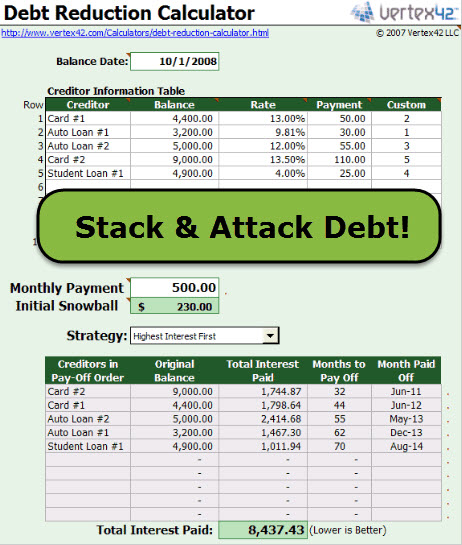
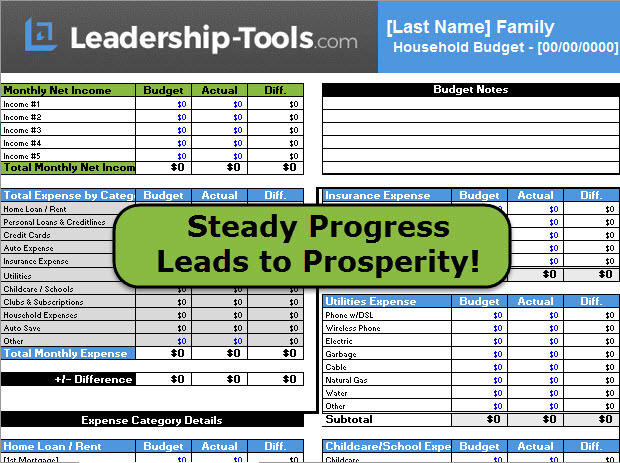
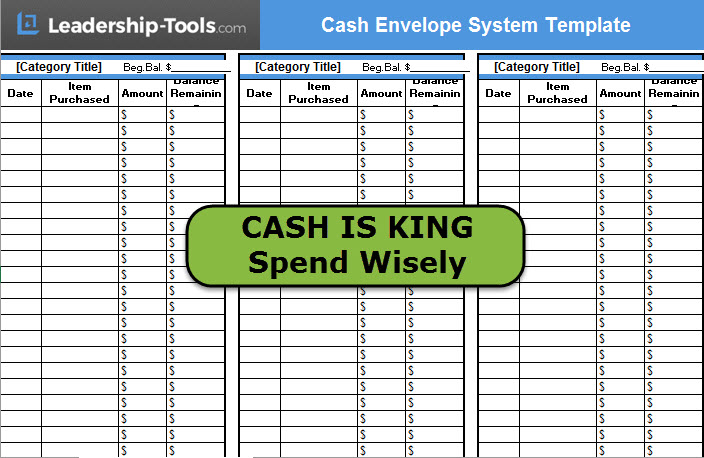
More 10 Steps to Conquer Debt Tools

Contact Information:
phone
(503) 970-9777
Email Customer Service
helpsupport@leadership-tools.com
Email Richard
richard@leadership-tools.com

By Richard Gorham
Leadership-Tools.com
2879 Riverwalk Loop, Eugene, Oregon, 97401
Copyright (c) 2002 - 2026 All Rights Reserved